Chicken of the woods Laetiporus sulphureus
Table of Contents
Easily recognised by its vibrant, overlapping golden-orange shelves, Chicken of the Woods is widely celebrated as one of the most distinctive and foolproof choice edible mushrooms in the United Kingdom. When harvested young and properly cooked, its texture and rich flavour remarkably resemble tender poultry (hence its name).

Quick Facts
- Edibility: Edible (Choice)
- Season: Summer to Autumn
- Habitat: Hardwood forests on dead or dying trees (oak, cherry, chestnut)
- Spore Print: White
Identification & Morphology
- Cap: Shelf-like brackets growing in overlapping clusters, featuring bright sulfur-yellow to vibrant orange margins with concentric zones of colour. The upper surface is velvety to smooth and fades with age.
- Gills: None; instead of traditional gills, Chicken of the Woods features a porous undersurface with tiny, bright yellow tube openings that release white spores.
- Stem: Typically sessile (lacking a true stem), attaching directly and broadly to the side of the tree trunk or wood base.
- Flesh: Thick, succulent, and moist when young, turning dry, chalky, and tough as the mushroom matures.
Habitat & Blooming Time
Chicken of the Woods is saprobic (an organism that feeds on dead or decaying organic matter) and occasionally parasitic, growing directly on wounded or decaying hardwoods, particularly oaks, sweet chestnuts, and willows. It primarily fruits from late summer through autumn, though flushes can occasionally appear after heavy summer rainfall. Because it is a perennial fruiting body on dead wood, it will often return to the exact same tree year after year until the nutrient source is completely exhausted.
Edibility & Toxicity
This mushroom is a prized culinary find, but proper preparation and identification are essential. Always harvest only the soft, tender outer margins of young specimens, as older caps become woody and unpalatable. Furthermore, avoid specimens harvested from conifers or eucalyptus trees, as these can occasionally cause gastrointestinal upset or absorb toxic compounds from the host tree. Beginners should always cook thoroughly and test a small portion first to ensure personal digestive compatibility.
Culinary & Preparation Guide: Chicken of the Woods
While Chicken of the Woods (Laetiporus sulphureus) is celebrated for its rich flavour and tender, poultry-like texture, proper handling and cooking are essential to ensure a safe and delicious meal.
1. Harvesting and Selection
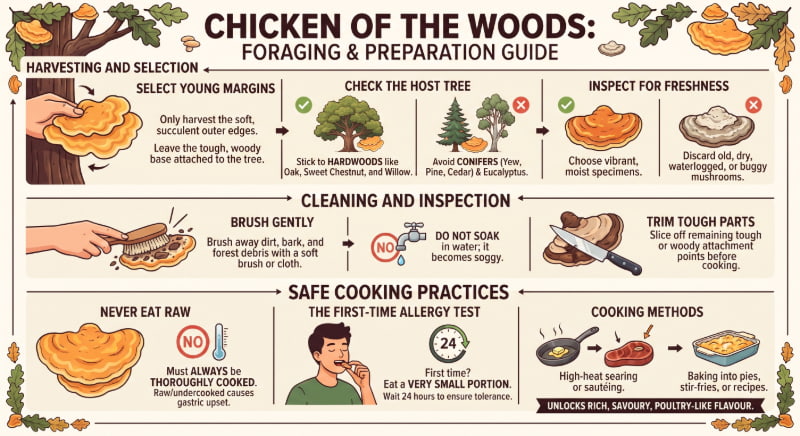
- Select Young Margins: Only harvest the soft, succulent outer edges of the brackets. Leave the tough, woody base attached to the tree.
- Check the Host Tree: Avoid harvesting specimens growing on conifers (such as yew, cedar, or pine) or eucalyptus trees, as these can accumulate resins that cause severe gastrointestinal distress. Stick to hardwoods like oak, sweet chestnut, and willow.
- Inspect for Freshness: Choose vibrant, moist specimens. Discard old, fading, or buggy mushrooms that have turned chalky, dry, or waterlogged.
2. Cleaning and Inspection
- Brush Gently: Gently brush away dirt, bark, and forest debris using a soft brush or damp cloth. Avoid soaking the mushroom in water like a sponge, as it absorbs moisture rapidly and can become soggy.
- Trim Tough Parts: Slice off any remaining tough or woody attachment points with a sharp knife before cooking.
3. Safe Cooking Practices
- Never Eat Raw: Chicken of the Woods must always be thoroughly cooked. Ingesting it raw or undercooked is a common cause of mild gastric upset.
- The First-Time Allergy Test: If you are trying this species for the very first time, eat only a very small cooked portion and wait 24 hours to ensure your digestive system tolerates it well before consuming a full meal.
- Cooking Methods: Because of its dense, meat-like texture, it holds up exceptionally well to high-heat searing, sautéing in butter or olive oil, breading and frying, or baking into savoury pies and stir-fries. Cooking breaks down tough cellular walls and unlocks its rich, savoury flavour profile.
Foraging Disclaimer
Wild mushroom identification and foraging carry inherent risks. The information provided on this website is for educational and informational purposes only and should not be considered professional mycological advice. Never consume any wild fungus unless you have 100% certainty of its positive identification. Always exercise caution, verify with multiple trusted field guides, and consult local experts before foraging or consuming wild mushrooms.
Chicken of the Woods: Frequently Asked Questions
Is Chicken of the Woods safe to eat?
Which trees do Chicken of the Woods grow on?
How do you identify Chicken of the Woods?
When is the best time to forage for Chicken of the Woods?
How should Chicken of the Woods be prepared for cooking?

This work is licensed under a Creative Commons Attribution 4.0 International License.
You are free to use, share and adapt any of the images on this page, under the condition we receive a followed backlink to our website https://diversegardens.co.uk as the image source.