Types of Bees
Table of Contents
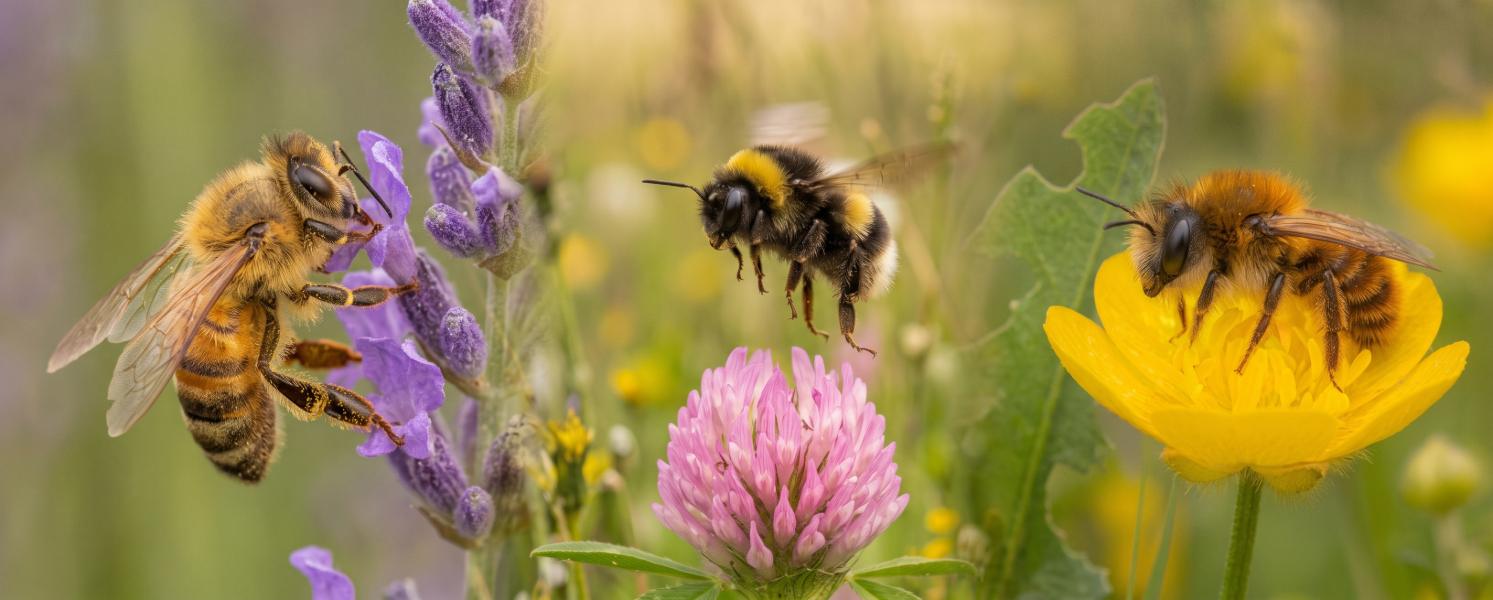
The UK is home to over 270 bee species, but just a small handful do most of the pollinating in our gardens. These common visitors generally fall into three main groups: familiar fuzzy bumblebees, social honeybees, and diverse solitary bees.
Each group has unique physical traits, from distinct colour bands to specific body shapes. Recognising these everyday bees makes it much easier to understand their nesting and foraging habits. Once you know exactly who is visiting, you can plant the right mix of wildflowers to help them thrive.
Bumblebees
Buff-tailed Bumblebee (Bombus terrestris)
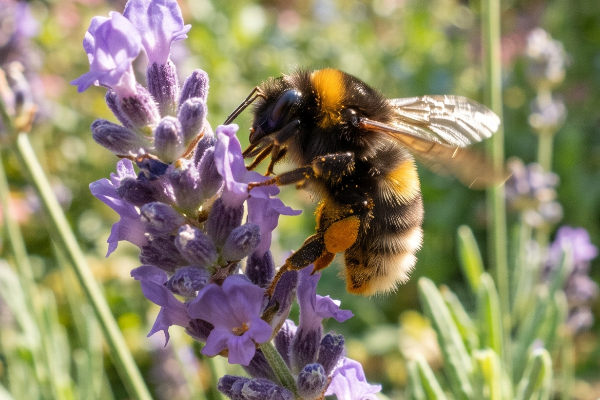
- Identification: Recognized by distinctive black and yellow bands with a white or buff tail. Queens and males feature buff-orange tails, while workers often display whiter tails.
- Preferred Plants: Clovers, vetches, and a wide variety of garden flora.
- When to See: Active from March to November, with active nests sometimes seen year-round in southern areas.
White-tailed Bumblebee (Bombus lucorum)
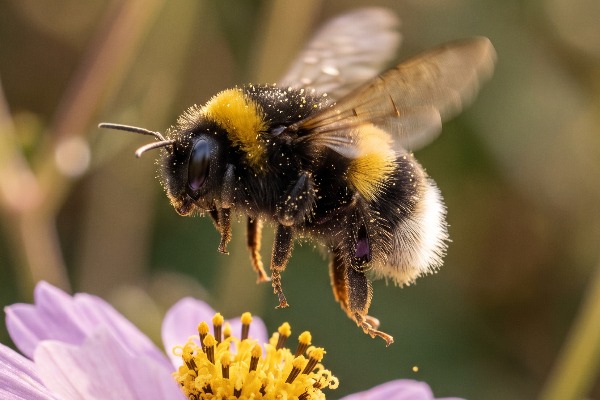
- Identification: Classic bumblebee appearance with lemon-yellow bands, a black body, and a pure white tail. Males have noticeable yellow facial hair.
- Preferred Plants: Open, shallow flowers (their short tongues make drinking from deep tubular flowers difficult).
- When to See: Visible from March/April through August/November.
Red-tailed Bumblebee (Bombus lapidarius)
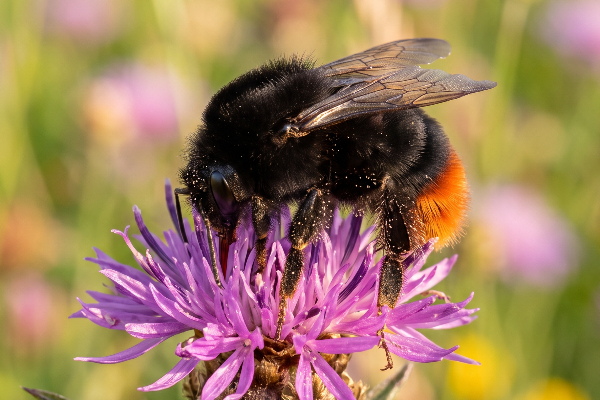
- Identification: Jet-black body with a bright red-orange tail. Males feature a yellow collar and midriff band.
- Preferred Plants: Dandelions, knapweed, and lavender.
- When to See: Observed from March/April through September/November.
Early Bumblebee (Bombus pratorum)
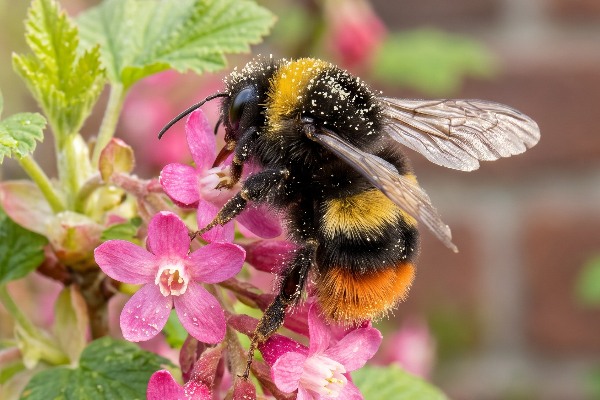
- Identification: One of the UK’s smallest bumblebees, featuring yellow and black bands and an orange/red tail.
- Preferred Plants: Summer fruit plants (such as raspberries), flowering trees, and bushes.
- When to See: Flies early in the season, from March to June/July.
Tree Bumblebee (Bombus hypnorum)
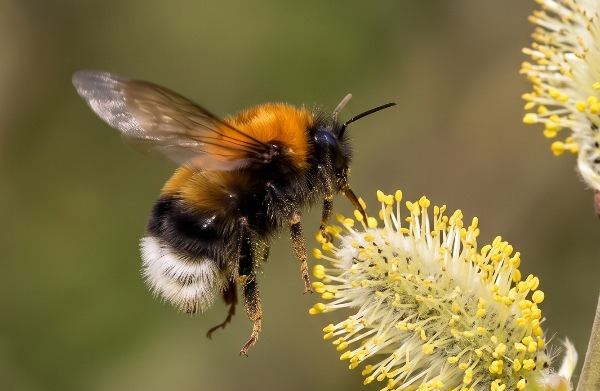
- Identification: Unique colour pattern with a ginger thorax, black abdomen, white tail, and dark underside.
- Preferred Plants: Raspberries, comfrey, bramble, and tree blossoms.
- When to See: Active from February/March to July/August.
Common Carder Bee (Bombus pascuorum)
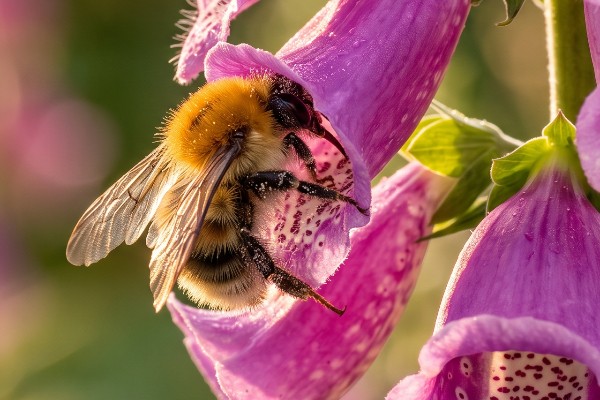
- Identification: Entirely brown or ginger-coloured without a white tail, ranging from bright ginger to sandy brown with dark abdominal hairs.
- Preferred Plants: Deep tubular flowers like foxgloves, dead-nettles, clovers, lavender, and beans.
- When to See: Long flight period from March to November.
Shrill Carder Bee (Bombus sylvarum)
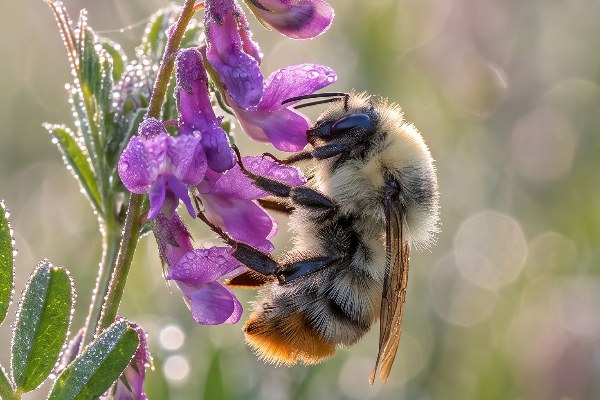
- Identification: Pale yellow and grey bands with a subtle peachy tail.
- Preferred Plants: Legume flowers including vetches, trefoils, and clovers.
- When to See: Active from May to September.
Honeybees
Honeybee (Apis mellifera)
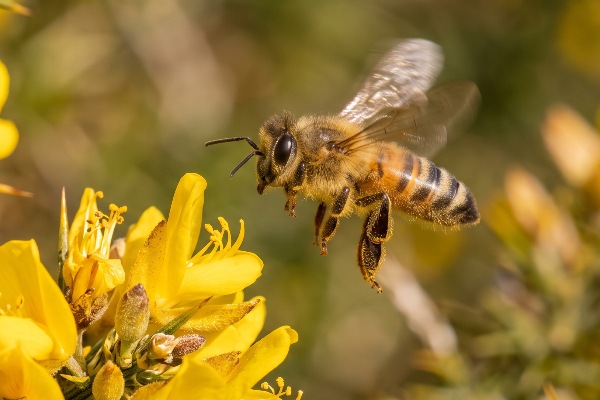
- Identification: Slim build with a sandy, buff-haired thorax and a black abdomen with golden-amber bands (or nearly all dark); rear legs are bare and shiny.
- Preferred Plants: Open blossoms easily accessed by short tongues, including dandelions, gorse, willow, hawthorn, roses, and herbs.
- When to See: Active from March to October.
Solitary Bees
Red Mason Bee (Osmia bicornis)
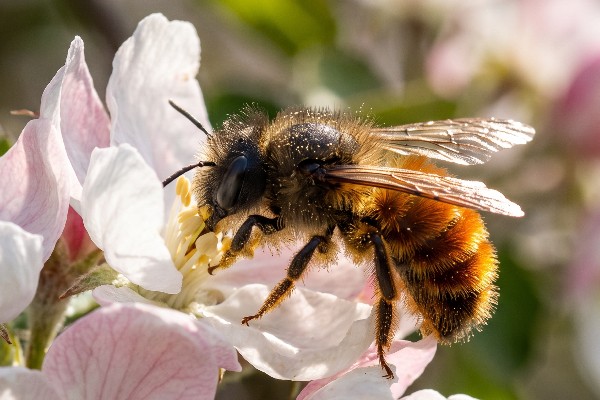
- Identification: Dense orange/ginger hair with a dark head and thorax. Females have a boxy head with inward-curving horns, while males feature a white facial hair moustache.
- Preferred Plants: Spring blossoms, apple, and pear trees.
- When to See: Active from March to June.
Tawny Mining Bee (Andrena fulva)
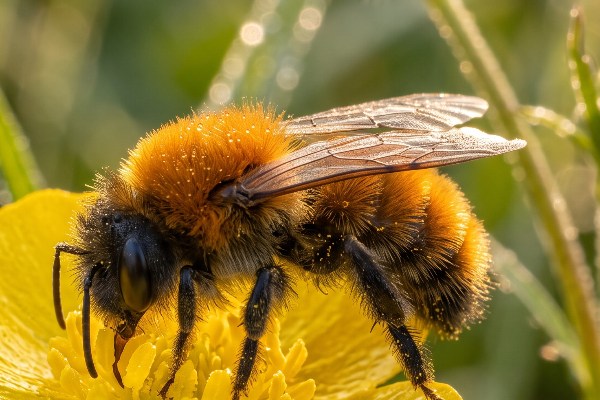
- Identification: Unmistakable bright gingery-red/orange coat on the thorax and rump with black facial and leg hairs.
- Preferred Plants: Spring fruit trees (cherry, apple, pear), buttercups, dandelions, hawthorn, blackthorn, maple, and willow.
- When to See: Flies from late March to June.
Ashy Mining Bee (Andrena cineraria)
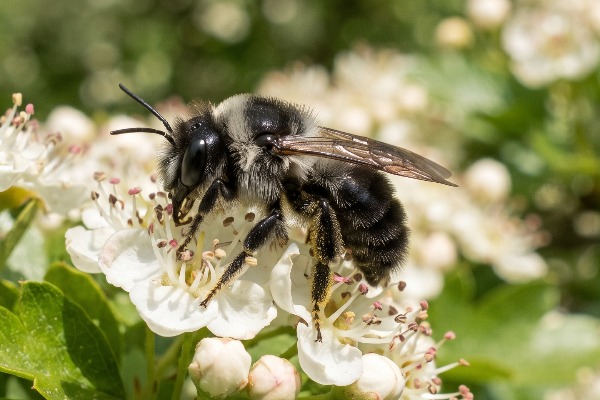
- Identification: Striking monochrome appearance with a black body and double ash-grey hair bands across the thorax.
- Preferred Plants: Oilseed rape, dandelions, buttercups, blackthorn, gorse, and fruit trees.
- When to See: Active from March to June.
Early Mining Bee (Andrena haemorrhoa)
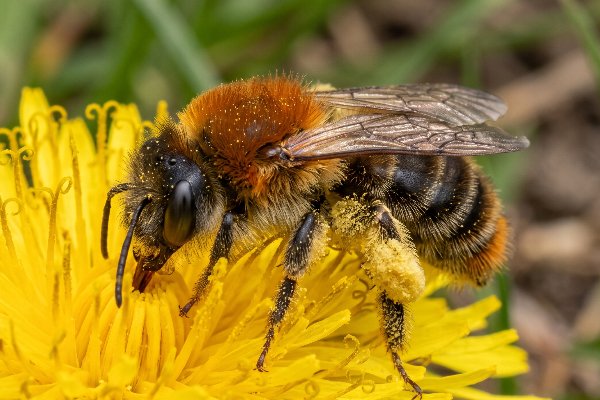
- Identification: Foxy-coloured thorax, light leg hairs, and a tuft of bright orange hairs at the tip of the black abdomen.
- Preferred Plants: A wide range of spring flowers, including dandelions and umbellifers.
- When to See: Emerges early, from March to June.
Hairy-footed Flower Bee (Anthophora plumipes)
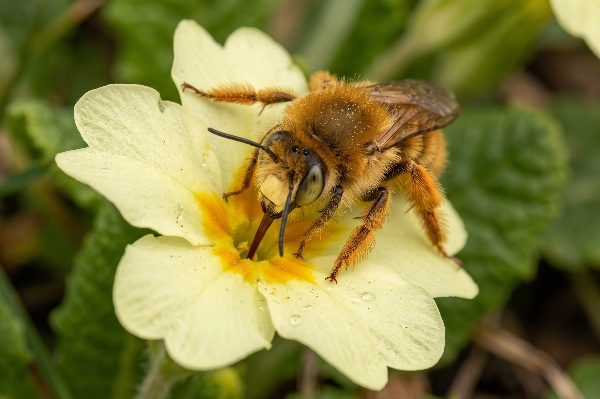
- Identification: Rapid, darting flight. Females are jet-black with orange hind-leg brushes; males are ginger-brown with a pale face and long plumes on their middle feet.
- Preferred Plants: Early garden blooms like lungwort, primroses, dead-nettles, comfrey, and wallflowers.
- When to See: One of the earliest spring bees, active from February to June.
Patchwork Leafcutter Bee (Megachile centuncularis)
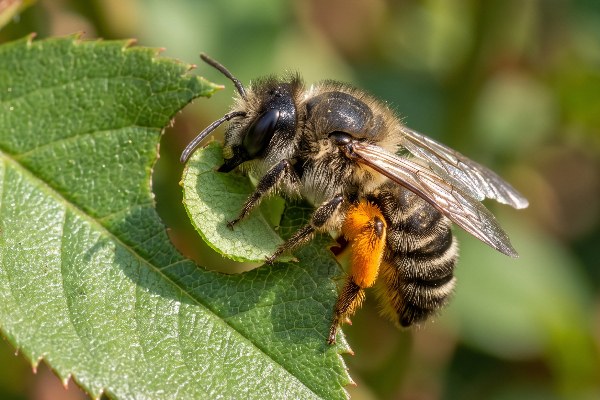
- Identification: Broad body with a bright orange pollen brush under the abdomen. Leaves clean crescent cutouts in rose leaves.
- Preferred Plants: Knapweed, thistles, bramble, and burdock.
- When to See: Active during summer, from June to September.
Wool Carder Bee (Anthidium manicatum)
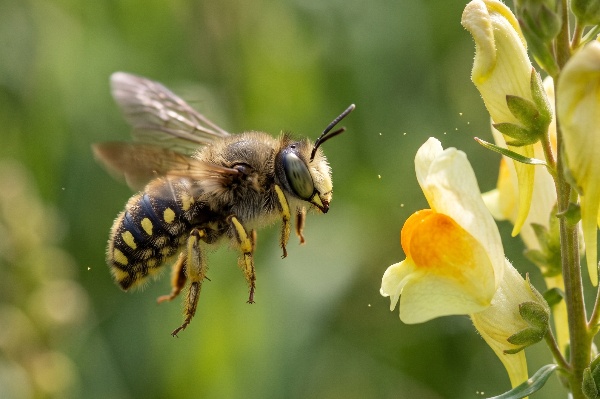
- Identification: Dark body with distinct yellow spots down each side of the abdomen; males are larger than females and possess rear abdominal spines.
- Preferred Plants: Lamb’s-ear (Stachys byzantina), toadflax, and pea/mint family plants.
- When to See: Visible from May to August.
Ivy Bee (Colletes hederae)
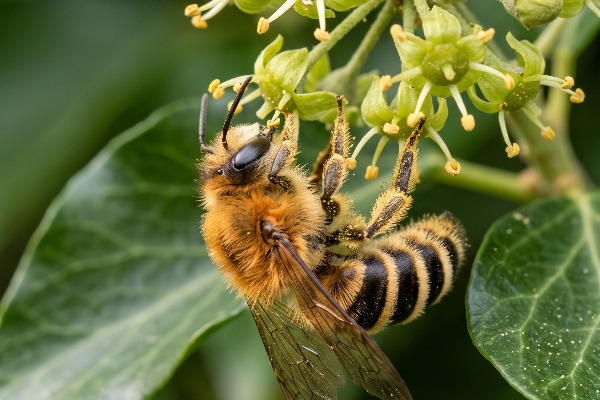
- Identification: Densely haired orange-brown thorax with bold black and yellow-orange abdominal bands.
- Preferred Plants: Feeds almost exclusively on nectar from flowering ivy.
- When to See: Emerges late in the season, from August/September to November.
Gooden’s Nomad Bee (Nomada goodeniana)
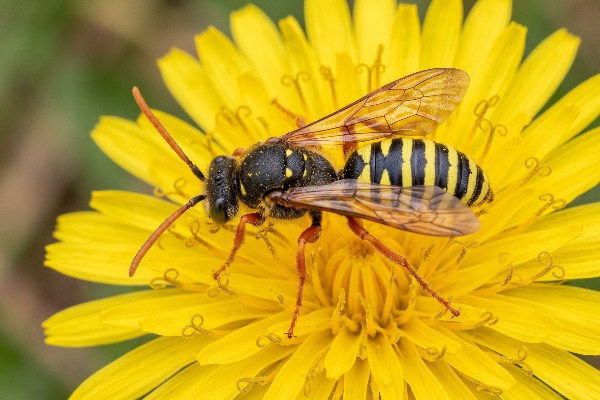
- Identification: Wasp-like kleptoparasite with orange legs, black/yellow abdominal bands, and no red abdominal markings.
- Preferred Plants: Various spring wildflowers near host mining bee nests.
- When to See: Visible from April to June.
Small Scissor Bee (Chelostoma campanularum)
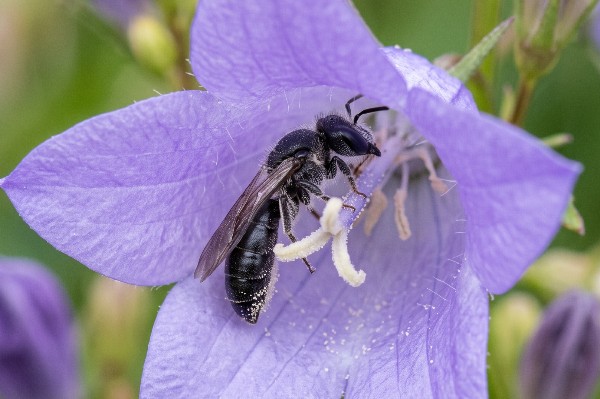
- Identification: Tiny (6–7 mm), slender, shiny black bee with a large head.
- Preferred Plants: Almost exclusively collects pollen from bellflowers (Campanula).
- When to See: Active from June to August.
Long-horned Bee (Eucera longicornis)
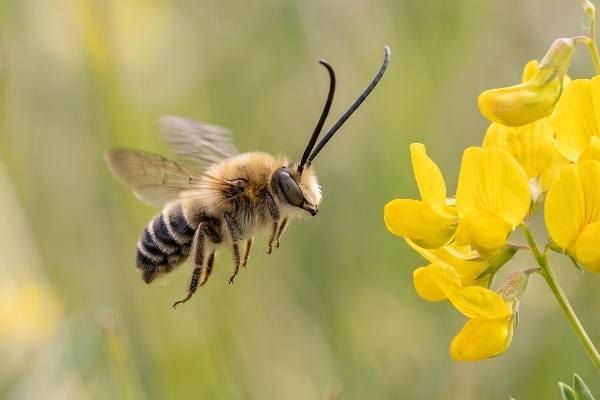
- Identification: Grey-brown body hair; males are unmistakable due to their oversized, long antennae.
- Preferred Plants: Fabaceae (legume) family flowers such as vetches, trefoils, and clovers.
- When to See: Active from May to August.
Types of Bees: Frequently Asked Questions
What are the main differences between the types of bees?
Bumblebees are social insects that form small seasonal colonies. Honey bees live in large, perennial hives governed by a single queen and produce harvestable honey. Solitary bees are non-social; every female is fertile and provisions her own individual nest.
What are solitary bees, and do they make honey?
Solitary bees, such as Red Mason and Leafcutter bees, do not produce honey. Because they do not have a colony to sustain through the winter, they only gather enough pollen and nectar to provision their individual nests before the adults die off.
Where do solitary bees nest?
They rely on the surrounding environment. Cavity nesters look for pre-existing holes like hollow plant stems, crumbling brickwork, or bamboo tubes in bee hotels. Ground nesters dig tiny, individual burrows in bare, well-draining soil or short turf.
Do all bees sting?
No. Male bees of all species lack a stinger entirely. Female solitary bees possess stingers but are incredibly docile and rarely sting. Honey bees and bumblebees are more prone to stinging, but generally only to defend their colonies.
How can I attract different bee species to a garden?
Plant a diverse mix of native wildflowers to accommodate different tongue lengths, such as bell-shaped flowers for bumblebees and shallow, open flowers for solitary bees. Leaving hollow plant stems intact over winter and installing bee houses provides vital nesting habitats.