• Menu
  • Skip to left header navigation
  • Skip to right header navigation
  • Skip to primary navigation
  • Skip to main content
  • Skip to footer

Before Header

  • Home
  • Blog
  • Cookie Policy (EU)

Diverse Gardens

Creating a wildlife friendly garden

  • Home
  • Blog
  • Cookie Policy (EU)
  • Disclaimer
  • Privacy
  • Search
  • Home
  • Wildflowers
    • How to grow wildflowers
    • Wildflower Gallery
    • Cornfield Annuals
  • Fungi
    • Fungi gallery
  • Bees & Pollinators
    • Types of Bees
  • Home
  • Wildflowers
    • How to grow wildflowers
    • Wildflower Gallery
    • Cornfield Annuals
  • Fungi
    • Fungi gallery
  • Bees & Pollinators
    • Types of Bees
Diverse Gardens Header

Blog

You are here: Home / Blog

The Best Plants to Grow near a Bee House

September 19, 2026 //  by Simon//  Leave a Comment

The Best Plants to Grow Near a Bee House for Attracting Pollinators

Building a DIY bee house is a fantastic way to support wild, solitary bees like mason bees and leafcutter bees in your garden. However, providing a safe nesting shelter is only half the battle. To truly help these pollinators thrive, they need a continuous, reliable source of nectar and pollen located close to their home.

Because solitary bees have a limited foraging range—usually only flying a few hundred metres from their nest—planting the right flowers directly around your bee house ensures they spend less energy searching for food and more time raising the next generation.


Why Plant Selection Matters for Solitary Bees

Unlike honeybees, which can travel miles to find food, solitary bees are independent and forage relatively close to their nesting sites. Planting a diverse mix of nectar-rich flowers that bloom sequentially from early spring through late summer guarantees that bees emerging from your bee house will always have access to vital energy.
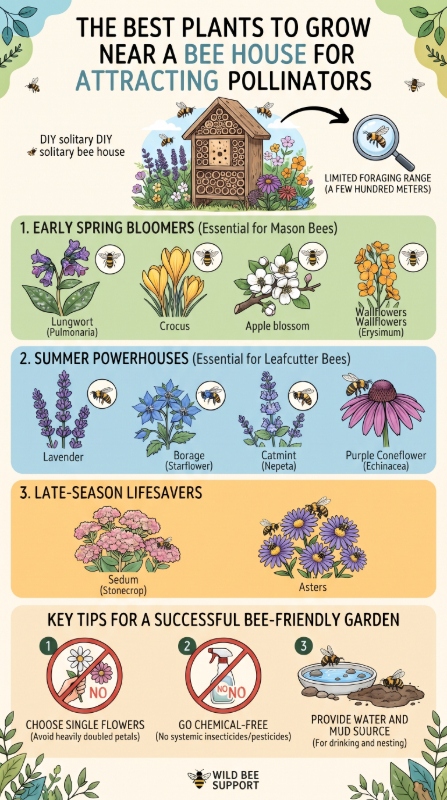

Infographic of recommended plants to grow near a bee houseTop Plants to Grow Near Your Bee House

1. Early Spring Bloomers (Essential for Mason Bees)

When mason bees emerge in early spring, food is often scarce. Providing early nectar sources is crucial for their survival:

  • Lungwort (Pulmonaria): One of the earliest perennials to bloom, offering rich nectar when spring food sources are low.
  • Crocus and Early Bulbs: Simple, open-faced spring bulbs provide easy access to early pollen for waking queens.
  • Fruit Trees (Apple, Pear, Plum): Not only do solitary bees provide exceptional pollination for fruit trees, but the blossom acts as a major food source.
  • Wallflowers (Erysimum): Incredibly easy to grow, long-blooming, and loved by early-season pollinators.

2. Summer Powerhouses (Essential for Leafcutter Bees)

As summer arrives, leafcutter bees become active and require nectar-heavy, open flowers:

  • Lavender: A classic garden favourite that produces abundant nectar and thrives in sunny, well-draining spots.
  • Borage (Starflower): A magnet for all types of bees, boasting continuous blue star-shaped flowers that bloom all summer long.
  • Catmint (Nepeta): Tough, drought-tolerant, and produces long spikes of purple-blue flowers that bees adore.
  • Purple Coneflower (Echinacea): Offers a wide landing pad for larger solitary bees and blooms deep into the summer months.

3. Late-Season Lifesavers

Help late-flying bees stock up before the colder weather sets in:

  • Sedum (Stonecrop): Provides a massive late-season feast of nectar right when summer flowers begin to fade.
  • Asters: Hardy perennials that deliver vital autumn colour and a valuable late food source.

Key Tips for a Successful Bee-Friendly Garden

To get the most out of your bee house and surrounding plants, keep these practical gardening tips in mind:

  • Choose Single Flowers: Avoid heavily doubled petalled flowers (like some decorative roses), as their breeding makes it nearly impossible for bees to access the pollen and nectar inside.
  • Avoid the use of Chemicals: Never use systemic insecticides, weed killers, or chemical pesticides anywhere near your pollinator garden or bee house.
  • Provide a Water and Mud Source: Alongside your plants, keep a shallow dish of fresh water with pebbles for landing, and ensure a patch of damp soil or clay is nearby so mason bees can gather mud to seal their nests.

Bee-Friendly Plants: Frequently Asked Questions

Why is it important to plant flowers close to a bee house?
Unlike honeybees that can travel miles for food, solitary bees (like mason and leafcutter bees) have a very limited foraging range—usually only a few hundred meters from their nest. Planting flowers right around your bee house ensures they spend less energy searching for food and more time raising their young.
Why should I avoid double-petalled flowers for pollinators?
Heavily double-petalled flowers (such as some decorative roses) have extra petals bred in place of reproductive organs, making it nearly impossible for bees to access the nectar and pollen hidden inside. Always opt for simple, open-faced flowers.
What else do solitary bees need besides flowers?
Alongside a continuous supply of seasonal nectar, solitary bees need a shallow dish of fresh water with pebbles for safe landing, and a nearby patch of damp soil or clay so mason bees can gather mud to build partitions and seal their nesting tubes.


Category: Pollinators

How I built this website

May 17, 2020 //  by Simon//  Leave a Comment

Category: Uncategorized

Medicinal Plants

May 17, 2020 //  by Simon//  Leave a Comment

Category: Uncategorized

Edible Plants

May 17, 2020 //  by Simon//  Leave a Comment

Category: Uncategorized

Helping de-hydrated bees

May 17, 2020 //  by Simon//  Leave a Comment

Category: Uncategorized

How to Build a Bee House

May 17, 2020 //  by Simon//  Leave a Comment

How to Build a Bee House: A Step-by-Step Guide for Your Garden

Supporting local pollinators is one of the most rewarding things you can do for your outdoor space. While honeybees get plenty of attention, solitary bees—such as mason bees and leafcutter bees—are our most prolific garden pollinators. Unlike honeybees, they don’t live in hives or produce honey; instead, individual females build private nests in hollow stems or wooden cavities.

Building a DIY bee house is a simple, budget-friendly weekend project that provides a safe haven for these gentle, non-aggressive garden helpers.


Why Solitary Bees Need Our Help

Habitat loss and urban development have severely reduced natural nesting sites for wild pollinators. By setting up a solitary bee hotel in your yard, garden, or even on a sunny apartment balcony, you give them a secure place to lay their eggs, ensuring a thriving population of pollinators for your fruit trees, vegetables, and flowers.

Step-by-Step Construction Guide

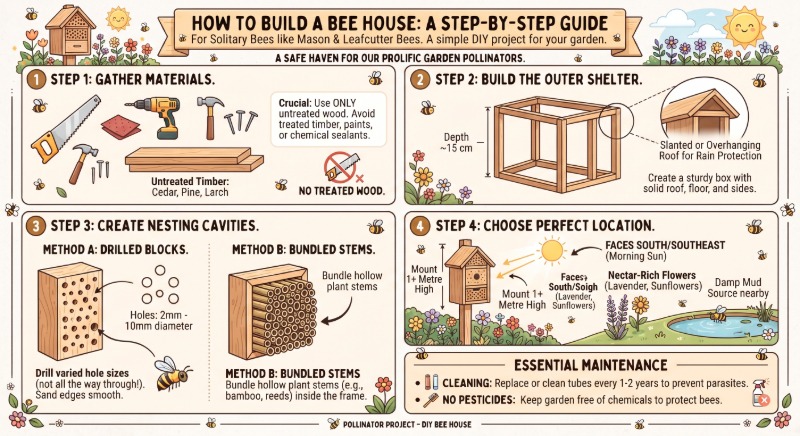
Step 1: Gather Your Materials and Tools

To build a safe, durable bee house, you will need untreated timber (such as cedar, pine, or larch), a hand saw, a power drill with assorted drill bits, sandpaper, and a sturdy mounting bracket.

  • Crucial Rule: Never use treated wood, paints, or chemical sealants, as these release toxins that can easily kill developing bee larvae.
  • Avoid plastic straws or open tin cans, which trap dangerous moisture and mold.

Step 2: Build the Outer Shelter Frame

Cut your untreated timber to form a simple wooden box with a solid roof, floor, and side panels. A standard depth of about 15 cm is ideal to protect the nesting tunnels from wind, rain, and predatory birds.

Make sure the roof has a slight downward slant or overhangs the front opening by at least a few centimeters to shed rainwater away from the nesting tubes.

Step 3: Create and Install the Tubes

You can fill your outer frame using two beginner-friendly methods:

  • Drilled Wood Blocks: Take a solid block of untreated hardwood and drill holes ranging from 2mm to 10mm in diameter to accommodate different bee species. Note: Never drill all the way through; blind holes (closed at the back) are required.
  • Bundled Natural Stems: Alternatively, bundle hollow plant stems like bamboo, elder, or reed grass tightly inside the frame.

Sand the edges of any drilled holes smooth to prevent delicate bee wings from tearing.

Step 4: Choose the Perfect Location

Location is everything when setting up your bee house. Mount the structure securely to a sturdy wall, fence post, or tree at least 1 metre off the ground to keep it safe from ground moisture and predators.

  • Position it facing south or southeast so the nesting chambers catch the morning sun, waking the cold-blooded insects up for foraging.
  • Place it near nectar-rich flowering plants and a source of damp mud or clay (used by mason bees to seal their nests).

Infographic showing the steps involved in building a bee house


Essential Maintenance Tips for Long-Term Success

A common mistake gardeners make is setting up a bee house and forgetting about it for years. Left uncleaned, old nests can accumulate parasitic mites and mold.

  • The Two-Year Rule: If using removable cardboard inserts or paper straws inside your drilled holes, you can gently harvest cocoons in late autumn and clean the house.
  • Avoid Chemicals: Never use pesticides or insecticides anywhere near your bee house or surrounding garden flowers.

Bee Houses: Frequently Asked Questions

When should I clean my bee house?
Bee houses should be cleaned annually in the late autumn (around October or November) after all the bee larvae have matured and sealed their chambers for the winter. If you used removable cardboard inserts or paper straws, you can carefully harvest and clean cocoons to prevent the buildup of parasitic mites, mold, and chalkbrood disease. If you drilled directly into solid blocks of wood, regular maintenance is trickier, but you can gently brush out empty tunnels and store moveable components in a cool, dry, unheated shed over winter to protect emerging bees from premature warmth.
What wood is safe to use for a DIY bee house?
Always use untreated, natural hardwoods or softwoods such as cedar, larch, pine, or oak. Avoid pressure-treated lumber, plywood, or engineered wood products that contain glues, chemical preservatives, or synthetic resins. These toxic treatments off-gas harmful VOCs (volatile organic compounds) and chemicals that can easily kill developing bee larvae inside the nesting tubes. Similarly, never paint, varnish, or seal the exterior or interior of the nesting cavities.

Category: Pollinators

Why I built this website

May 17, 2020 //  by Simon//  Leave a Comment

Category: Uncategorized

Hello world!

April 30, 2020 //  by Simon//  1 Comment

Welcome to WordPress. This is your first post. Edit or delete it, then start writing!

Category: Uncategorized

Footer

Quote

If the bee disappeared off the surface of the globe then man would only have four years of life left.

No more bees, no more pollination, no more plants, no more animals, no more man.

Albert Einstein

Recent Posts

The Best Plants to Grow near a Bee House
Wordpress LogoHow I built this website
SelfhealMedicinal Plants
Forget Me NotEdible Plants
Bumble BeeHelping de-hydrated bees
Insect HouseHow to Build a Bee House

Site Footer

  • Facebook
  • Flickr
  • Instagram
  • Pinterest
  • YouTube

Copyright © 2026 · Mai Lifestyle Pro on Genesis Framework · WordPress · Log in