• Menu
  • Skip to left header navigation
  • Skip to right header navigation
  • Skip to primary navigation
  • Skip to main content
  • Skip to primary sidebar
  • Skip to footer

Before Header

  • Home
  • Blog
  • Cookie Policy (EU)

Diverse Gardens

Creating a wildlife friendly garden

  • Home
  • Blog
  • Cookie Policy (EU)
  • Disclaimer
  • Privacy
  • Search
  • Home
  • Wildflowers
    • How to grow wildflowers
    • Wildflower Gallery
    • Cornfield Annuals
  • Fungi
    • Fungi gallery
  • Bees & Pollinators
    • Types of Bees
    • Impact of Pesticides on Bees
  • Home
  • Wildflowers
    • How to grow wildflowers
    • Wildflower Gallery
    • Cornfield Annuals
  • Fungi
    • Fungi gallery
  • Bees & Pollinators
    • Types of Bees
    • Impact of Pesticides on Bees
Jelly ear header

Jelly ear

Resembling human ears sprouting straight from decaying wood, the Jelly Ear mushroom is a gelatinous marvel. When rehydrated, its unique crunch transforms soups and stir-fries, making it a foolproof, rewarding find for winter foragers

You are here: Home / Fungi / Fungi gallery / Jelly ear

Jelly ear Auricularia auricula-judae

Table of Contents

    • Jelly ear Auricularia auricula-judae
  • Quick Facts
  • Identification & Morphology
  • Habitat & Blooming Time
  • Edibility & Toxicity
    • Foraging Disclaimer
  • Jelly Ear: Frequently Asked Questions

Resembling human ears sprouting from rotting wood, this gelatinous marvel transforms into a crisp, translucent delicacy when rehydrated. Highly prized in Asian cuisine for its unique, crunchy texture, it is a foolproof find for winter foragers.

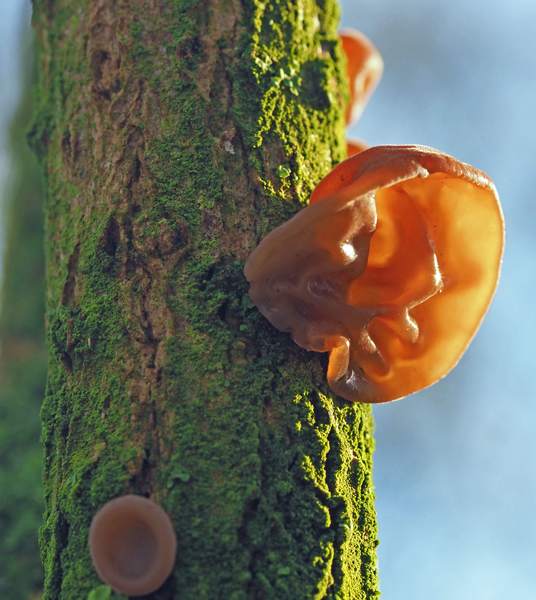
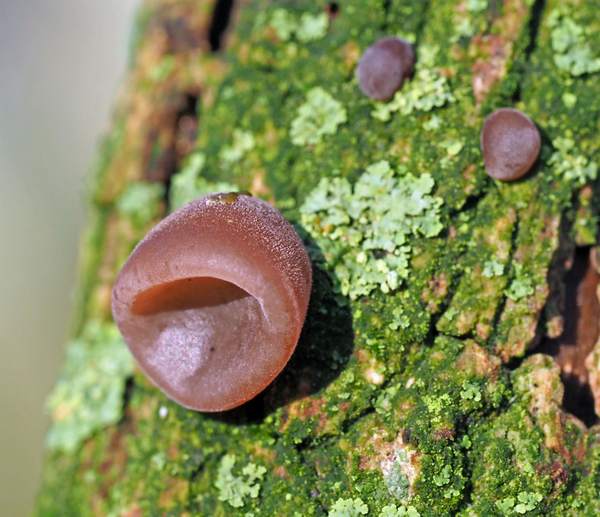
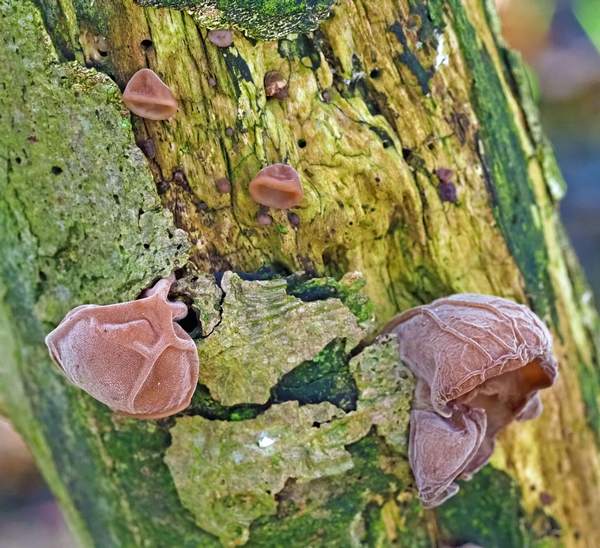
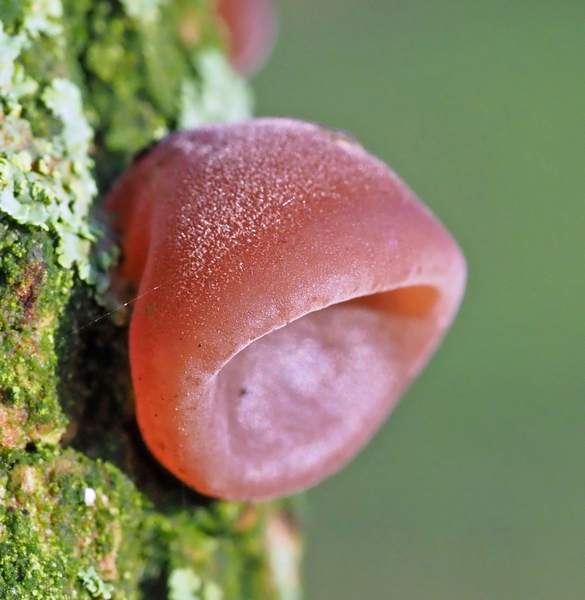
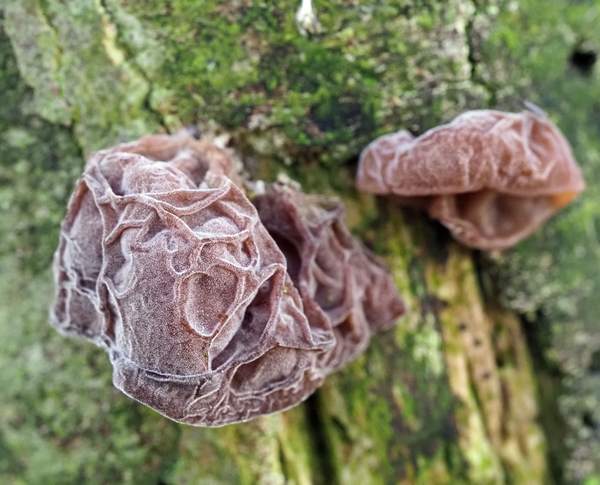
Vibrant reddish-brown Jelly Ear fungi with ear-like lobes growing on a decaying tree trunk in a British woodland

Quick Facts

  • Edibility: Edible (Choice)

  • Season: Autumn to Spring (especially after heavy winter rains)

  • Habitat: Dead or dying deciduous wood, primarily elder (Sambucus)

  • Spore Print: White

Identification & Morphology

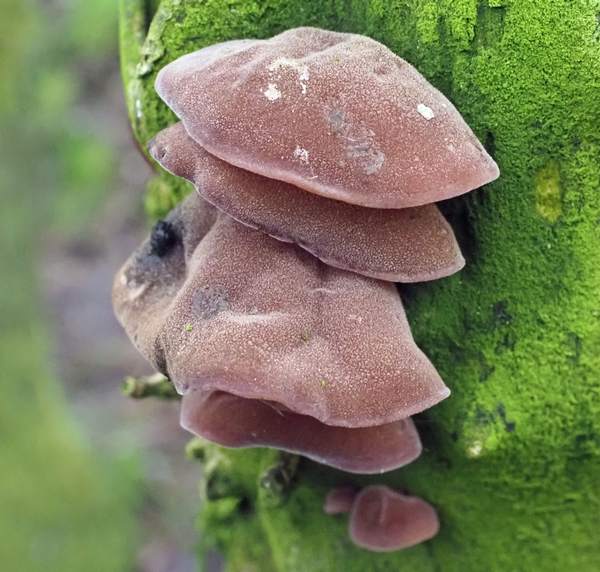
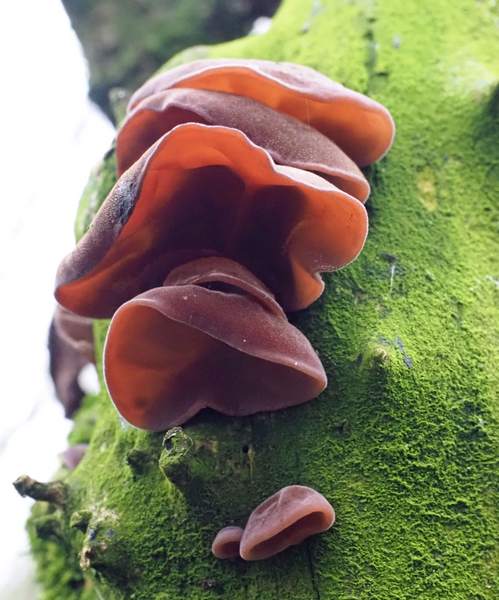
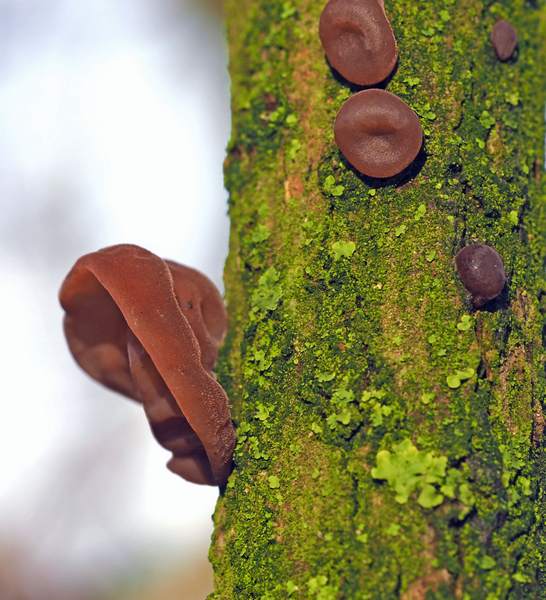
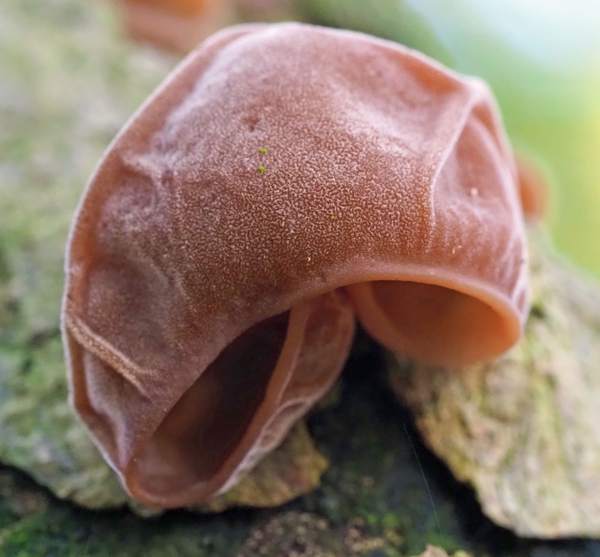
  • Cap: Ear-like or cup-shaped, 3 to 8 cm across, wavy and lobed; the upper surface is velvety with fine hairs, greyish-brown to deep reddish-brown, often featuring prominent veins that mimic the folds of an ear.

  • Gills: True gills are absent; the fertile inner surface is smooth to slightly wrinkled or veined, becoming gelatinous and rubbery when damp and shriveling into a hard, brittle crust when dry.

  • Stem: Stemless (sessile), attaching directly to the wood via a small, lateral base or root-like point.

  • Flesh: Thin, rubbery, and gelatinous when fresh; becomes leathery and rigid as it dries out, capable of reviving completely after rainfall.

Habitat & Blooming Time

Jelly Ear is a saprotrophic fungus that thrives on dead, dying, or decaying hardwood branches and trunks. It shows a strong ecological preference for elder (Sambucus nigra), though it is frequently found on beech, sycamore, and elm. Unlike many mushrooms that vanish with the first autumn frost, Jelly Ear fruits year-round during damp spells, reaching peak abundance and plumpness through the wet winter months from November to March.

Edibility & Toxicity

Jelly Ear is widely regarded as a safe and choice edible, long celebrated in traditional Chinese cooking (known as wood ear or black fungus) for its ability to absorb rich savory flavors. While it has little distinct taste of its own, its iconic, cartilaginous crunch adds a magnificent texture to soups, stir-fries, and broths.

Foraging Disclaimer

Wild mushroom identification and foraging carry inherent risks. The information provided on this website is for educational and informational purposes only and should not be considered professional mycological advice. Never consume any wild fungus unless you have 100% certainty of its positive identification. Always exercise caution, verify with multiple trusted field guides, and consult local experts before foraging or consuming wild mushrooms.

Look-alikes & Safety:

  • Amber Jelly Roll (Exidia glandulosa): Darker, lobed, and covered in tiny glandular dots rather than a velvety exterior, but similarly edible.

  • Brain Mushroom (Gyromitra esculenta) or toxic cup fungi: Can occasionally be mistaken by total beginners, but Jelly Ear’s distinct rubbery, ear-like lobes and association with wood make it exceptionally safe and easy to identify. Always forage away from polluted roadside trees.
Jelly ear
Jelly ear
Jelly ear
Jelly ear
Jelly ear
Jelly ear
Jelly ear
Jelly ear
Jelly ear

Jelly Ear: Frequently Asked Questions

What is Jelly Ear?
Jelly Ear (Auricularia auricula-judae) is a distinct, gelatinous wild fungus known for its uncanny resemblance to human ears. It has a rubbery, elastic texture when fresh and is prized in Asian cuisine for adding a unique crunch to soups and stir-fries.
Where does Jelly Ear grow?
It is a saprotrophic fungus that grows primarily on dead or dying deciduous wood, showing a very strong ecological preference for elder (Sambucus nigra), as well as beech and sycamore trees in British woodlands.
Is Jelly Ear edible?
Yes, Jelly Ear is classified as a choice edible mushroom. While it has a very mild flavor of its own, it excels at absorbing the rich savory flavors of broths and sauces while providing a wonderful cartilaginous crunch.
When is the best time to find Jelly Ear?
Unlike many seasonal mushrooms that vanish with the autumn frost, Jelly Ear fruits year-round during wet weather and reaches peak abundance and plumpness through the damp winter months from November to March.
Can Jelly Ear dry out and revive?
Yes, during dry spells, Jelly Ear shrivels up into a hard, brittle, dark crust on the wood. However, when heavy autumn or winter rains arrive, it absorbs moisture and completely rehydrates back to its original gelatinous state.
Are there dangerous look-alikes for Jelly Ear?
Jelly Ear is considered one of the safest and easiest mushrooms for beginners to identify due to its unique shape and texture on wood. While similar jelly fungi exist (such as the Amber Jelly Roll), none are known to be dangerously toxic.

Creative Commons Licence
This work is licensed under a Creative Commons Attribution 4.0 International License.
You are free to use, share and adapt any of the images on this wildflower gallery page, under the condition we receive a followed backlink to our website https://diversegardens.co.uk as the image source.

Related content:

Fungi gallery featuredFungi gallery Chicken of the woods featuredChicken of the woods Dryad's saddle featuredDryad’s saddle WildflowerWildflower Gallery Fly argaric featuredFly Agaric

Primary Sidebar

Subscribe for Updates
We respect your privacy.

Navigation

  • Home
  • Sample Page

Recent Posts

  • The Best Plants to Grow near a Bee House
  • How I built this website
  • Medicinal Plants
  • Edible Plants
  • Helping de-hydrated bees

Recent Comments

  • A WordPress Commenter on Hello world!

Navigation

  • Home
  • Sample Page

Footer

Quote

If the bee disappeared off the surface of the globe then man would only have four years of life left.

No more bees, no more pollination, no more plants, no more animals, no more man.

Albert Einstein

Recent Posts

The Best Plants to Grow near a Bee House
Wordpress LogoHow I built this website
SelfhealMedicinal Plants
Forget Me NotEdible Plants
Bumble BeeHelping de-hydrated bees
Insect HouseHow to Build a Bee House

Site Footer

  • Facebook
  • Flickr
  • Instagram
  • Pinterest
  • YouTube

Copyright © 2026 · Mai Lifestyle Pro on Genesis Framework · WordPress · Log in