• Menu
  • Skip to left header navigation
  • Skip to right header navigation
  • Skip to primary navigation
  • Skip to main content
  • Skip to primary sidebar
  • Skip to footer

Before Header

  • Home
  • Blog
  • Cookie Policy (EU)

Diverse Gardens

Creating a wildlife friendly garden

  • Home
  • Blog
  • Cookie Policy (EU)
  • Disclaimer
  • Privacy
  • Search
  • Home
  • Wildflowers
    • How to grow wildflowers
    • Wildflower Gallery
    • Cornfield Annuals
  • Fungi
    • Fungi gallery
  • Bees & Pollinators
    • Types of Bees
    • Impact of Pesticides on Bees
  • Home
  • Wildflowers
    • How to grow wildflowers
    • Wildflower Gallery
    • Cornfield Annuals
  • Fungi
    • Fungi gallery
  • Bees & Pollinators
    • Types of Bees
    • Impact of Pesticides on Bees
King Alfred's cakes header

King Alfred’s cakes

Although inedible, King Alfred’s cakes can be used as hand warmers, firelighters and briquette’s for campfires, hence the alias coal fungus. Keep a lookout for them in woodland on dead or decaying fallen ash trees.

You are here: Home / Fungi / Fungi gallery / King Alfred’s cakes

King Alfred’s cakes Daldinia concentrica

Table of Contents

  • King Alfred’s cakes Daldinia concentrica
  • Quick Facts
  • Identification & Morphology
  • Habitat & Blooming Time
  • Edibility & Toxicity
  • King Alfred’s Cakes: Frequently Asked Questions

A rigid, spherical, coal-like fungus lacking a traditional cap or stem, widely famous in bushcraft for acting as an exceptional, slow-burning natural firelighter.
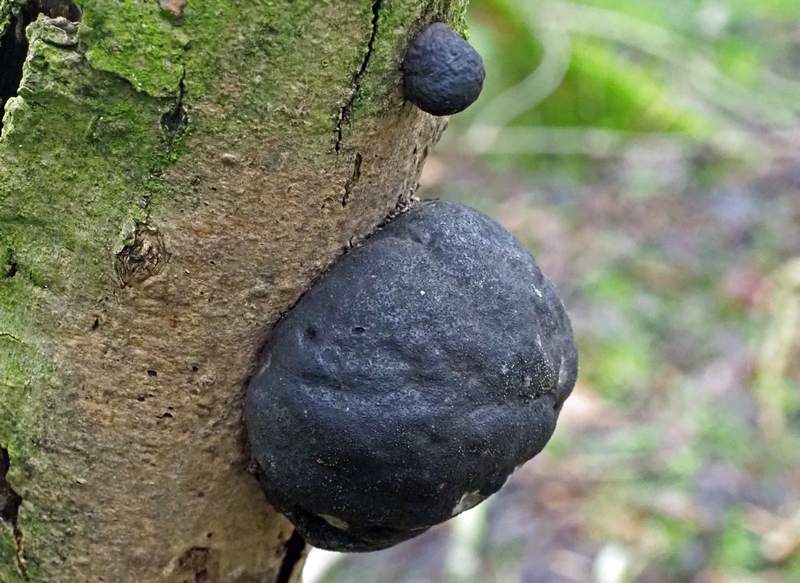
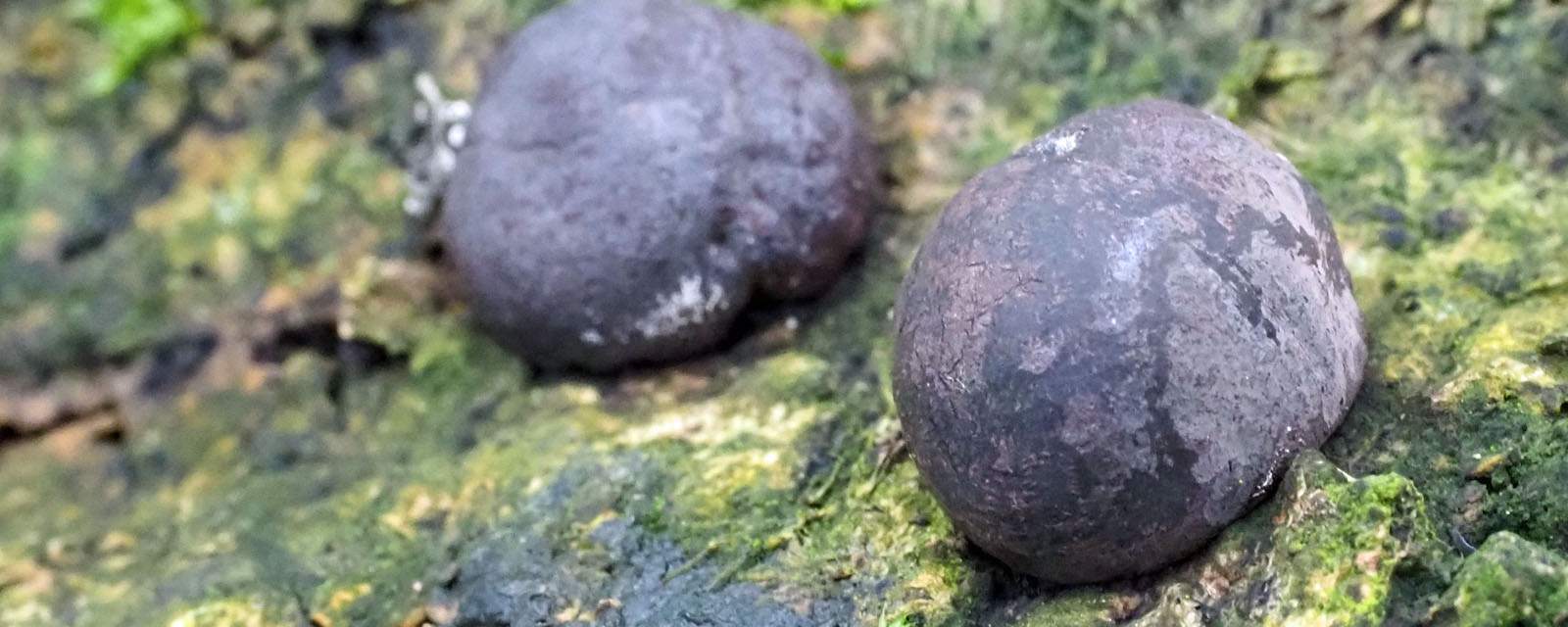
Close-up of a hard, black, spherical King Alfred's Cakes fungus (Daldinia concentrica) attached to a rotting hardwood branch in a British woodland.


Quick Facts

  • Edibility: Inedible (Toxic/Unpalatable)

  • Season: Year-round (most prominent in Autumn to Spring)

  • Habitat: Hardwood forests and deadwood (predominantly on fallen ash and beech)

  • Spore Print: Black

Identification & Morphology

  • Cap: King Alfred’s cakes lacks a traditional cap entirely; forms a hemispherical, hard, woody fruiting body (stroma) roughly 2 to 7 centimetres across, closely resembling a lump of coal or burnt dough.

  • Gills: Absent; lacks gills, pores, or a distinct underside hymenium layer. The spore-producing surface coats the exterior shell.

  • Stem: Stemless; attaches directly and firmly to the host log or branch via a narrow base or sessile point.

  • Flesh: Extremely hard, dry, and woody. When sliced open vertically, it reveals striking, alternating concentric rings of silver-grey and shiny black layers, similar to the growth rings of a tree.

Habitat & Blooming Time

King Alfred’s Cakes are saprotrophic fungi that play a crucial ecological role in breaking down dead and decaying wood. They fruit predominantly on decaying broadleaf trees, showing a strong preference for ash (Fraxinus excelsior) and beech (Fagus). They can be found throughout the year in damp woodlands, hedgerows, and along shaded forest paths, frequently persisting on standing snags or fallen branches long after storms.

Edibility & Toxicity

Despite the tempting folklore surrounding their common name—referencing the legend of King Alfred letting a peasant woman’s cakes burn on the hearth—these fungi are strictly inedible. Their woody, cork-like texture makes them impossible to chew or digest. They contain no culinary value and are considered unpalatable rather than acutely poisonous, though consuming them would cause severe gastrointestinal distress. Instead of the kitchen, their historical value lies entirely in bushcraft: when thoroughly dried, they readily take a spark from traditional flint and steel, smouldering slowly and steadily like a natural charcoal briquette.

King Alfred’s Cakes: Frequently Asked Questions

What are King Alfred’s Cakes?
King Alfred’s Cakes (Daldinia concentrica) are hard, hemispherical, saprotrophic fungi that grow on dead and decaying wood. They closely resemble small chunks of coal or burnt lumps of bread dough, typically measuring between 2 to 7 centimetres across.
Why are they called King Alfred’s Cakes?
The common name comes from a famous British historical legend in which King Alfred hid in a peasant woman’s hut and was tasked with watching her cakes bake. Distracted by his royal duties, he let them burn. The dark, carbon-like appearance of the fungus is said to resemble those ruined cakes.
Are King Alfred’s Cakes edible?
No, they are completely inedible due to their extremely hard, woody, and dry texture. However, they are non-toxic and have historically been used for entirely different practical purposes rather than consumption.
What are they used for?
Dry specimens are exceptionally useful for bushcraft and survival skills. Once thoroughly dried, they readily take a spark from a traditional flint and steel, smouldering very slowly like a charcoal briquette. This makes them ideal for natural fire-lighting, acting as hand warmers, or transporting a smouldering ember safely.
What do they look like on the inside?
If you crack or cut open a mature fruiting body, you will see a distinct pattern of silvery-black, brown, and purple concentric growth rings. Much like tree rings, these layers represent seasonal growth phases of the fungus.
Where and when can you find them?
They can be found year-round across temperate regions, growing primarily on dead or fallen broadleaf wood, particularly ash trees, as well as beech. They start out brownish and reddish when young before turning shiny black and brittle with age.

Creative Commons Licence
This work is licensed under a Creative Commons Attribution 4.0 International License.
You are free to use, share and adapt any of the images on this page, under the condition we receive a followed backlink to our website https://diversegardens.co.uk as the image source.
Related content:

Jelly ear featuredJelly ear Fungi gallery featuredFungi gallery Chicken of the woods featuredChicken of the woods Dryad's saddle featuredDryad’s saddle Fly argaric featuredFly Agaric

Primary Sidebar

Subscribe for Updates
We respect your privacy.

Navigation

  • Home
  • Sample Page

Recent Posts

  • The Best Plants to Grow near a Bee House
  • How I built this website
  • Medicinal Plants
  • Edible Plants
  • Helping de-hydrated bees

Recent Comments

  • A WordPress Commenter on Hello world!

Navigation

  • Home
  • Sample Page

Footer

Quote

If the bee disappeared off the surface of the globe then man would only have four years of life left.

No more bees, no more pollination, no more plants, no more animals, no more man.

Albert Einstein

Recent Posts

The Best Plants to Grow near a Bee House
Wordpress LogoHow I built this website
SelfhealMedicinal Plants
Forget Me NotEdible Plants
Bumble BeeHelping de-hydrated bees
Insect HouseHow to Build a Bee House

Site Footer

  • Facebook
  • Flickr
  • Instagram
  • Pinterest
  • YouTube

Copyright © 2026 · Mai Lifestyle Pro on Genesis Framework · WordPress · Log in