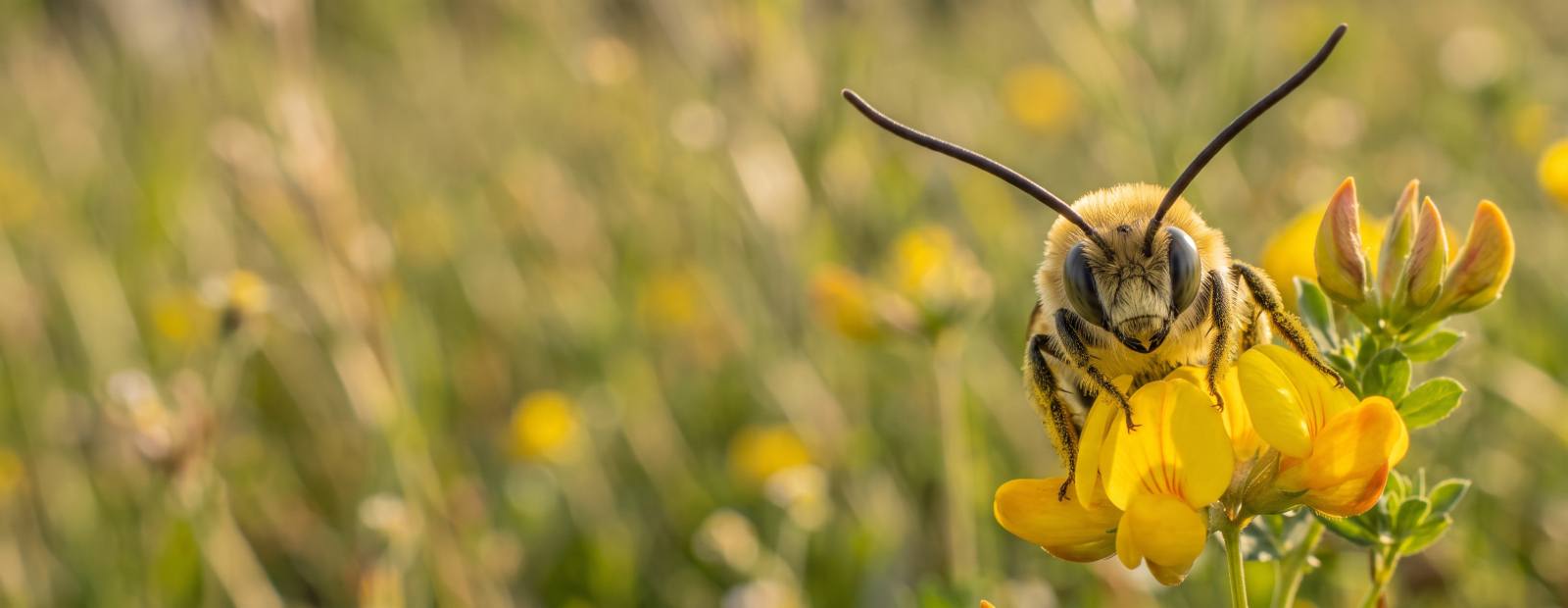
Creating a garden that attracts solitary bees is one of the most rewarding ways to support pollinators, and they are incredibly peaceful guests. Unlike honeybees or bumblebees, solitary bees don’t live in colonies or produce honey, which means they aren’t aggressive and don’t sting as they don’t have a hive to defend. To encourage them, you need to provide them with three essentials: food, nesting sites, and water.
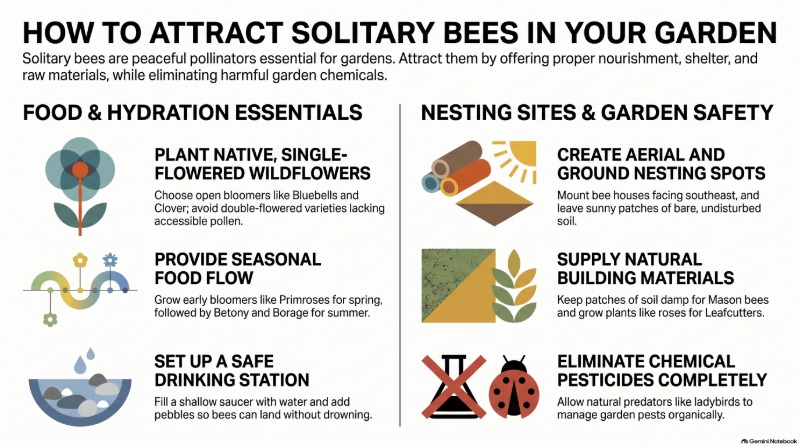
1. Plant Nectar-Rich Native Wildflowers
Table of Contents
Solitary bees are often active early in the year and rely heavily on local pollen and nectar. Many species have evolved alongside specific native plants, making native British wildflowers your best choice.
- Early bloomers: Solitary bees like the Hairy-footed Flower Bee emerge in early spring, so plants like Bluebells (Hyacinthoides non-scripta), Lungwort, and Primroses are essential first foods.
- Summer staples: As the season warms, introduce Betony (Betonica officinalis), Borage (Borago officinalis), and White Clover (Trifolium repens). These are magnets for solitary bees.
- Flower shape matters: Try to include open, single-flowered plants. Double-flowered varieties often have very little pollen, or the nectar is too difficult for solitary bees to reach.
2. Provide Nesting Habitats (Above and Below Ground)
Different solitary bees nest in very different ways, so offering a variety of habitats is key.
- For aerial nesters (like Mason Bees and Leafcutter Bees): These bees look for existing holes or hollow stems to lay their eggs. DIY Bee Houses: You can easily build or buy a solitary bee house. Use hollow bamboo canes, or drill holes (varying from 2mm to 10mm in diameter) into untreated blocks of wood.
- Placement: Hang your bee house securely against a wall or fence, facing south or south-east so it catches the morning sun, about 1 to 1.5 meters off the ground. Make sure it won’t swing in the wind.
- Natural alternatives: Leave hollow stems on plants (like teasels, fennel, or brambles) uncut over the winter. For ground nesters (like Mining Bees): Around 70% of solitary bees actually nest underground, excavating tiny burrows in the soil.
- Leave bare soil: Try to leave some patches of well-drained, unmulched, and un-netted soil in sunny spots.
- Avoid heavy tilling and disturbance: Minimize digging in these areas, as it can destroy existing nests. Look for small mounds of soil: You’ll know they’ve moved in if you spot tiny mounds of excavated soil with a hole in the center.
3. Provide Nesting Materials and Water
- Mud for Mason Bees: Red Mason bees need damp mud to build the protective walls between their egg cells inside their chosen holes. Keep a small patch of soil continually damp during spring.
- Leaves for Leafcutter Bees: Leafcutter bees neatly snip circles out of leaves (often roses or wisteria) to line their nests. If you see perfect semi-circles missing from your plants, celebrate it! It means they are nesting nearby.
- A safe drinking spot: Create a shallow water station by filling a saucer with water and adding a few pebbles or marbles so the bees have something to land on without drowning.
4. Ditch the Chemicals
Solitary bees are highly sensitive to pesticides and insecticides. The best approach is to stop using them entirely. Embrace a slightly “unkempt” garden where natural predators like ladybirds and hoverflies can help manage aphids and other pests naturally.