

Hare’s foot inkcap Coprinopsis lagopus
Table of Contents
A delicate, short-lived woodland saprotroph distinguished by a dense coating of silvery-grey, hare-like down that rapidly dissolves into black ink.

Quick Facts
- Edibility: Inedible / Worthless (too fragile and insubstantial)
- Blooming Season / Fruiting Time: Summer to Autumn (often appearing after heavy rain)
- Habitat: Rich woodland soil, rotting wood chips, garden mulch, and disturbed ground
- Spore Print: Black
Identification & Classification
- Scientific Name: Coprinopsis lagopus (formerly Coprinus lagopus)
- Common Names: Hare’s Foot Inkcap, Haresfoot Inkcap
- Taxonomic Hierarchy: Kingdom: Fungi | Phylum: Basidiomycota | Class: Agaricomycetes | Order: Agaricales | Family: Psathyrellaceae | Genus: Coprinopsis
Physical Characteristics (Morphology)
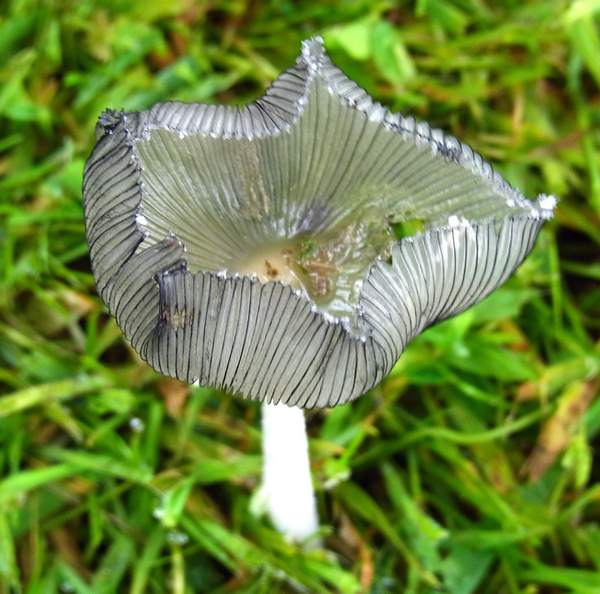
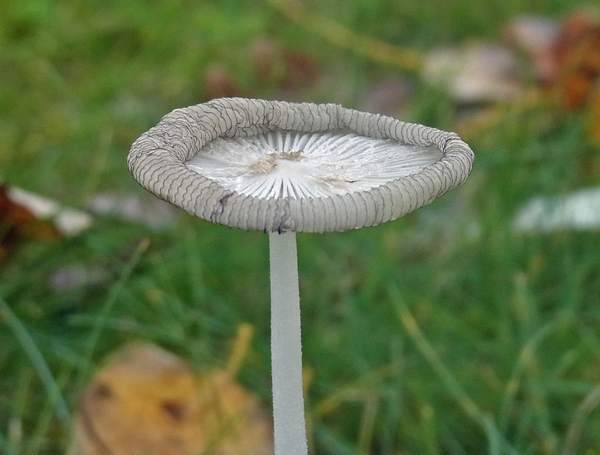
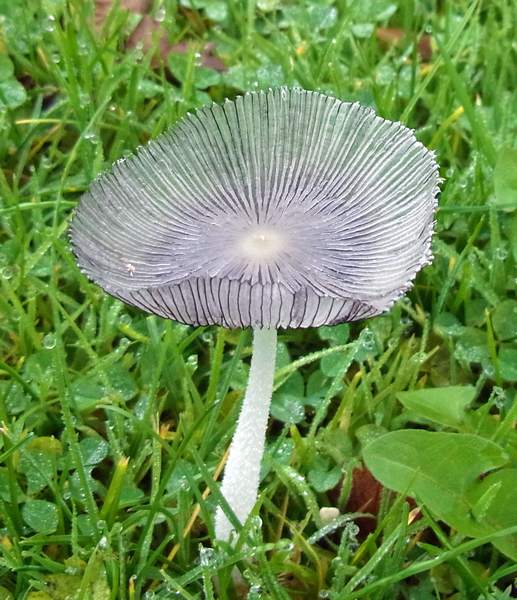
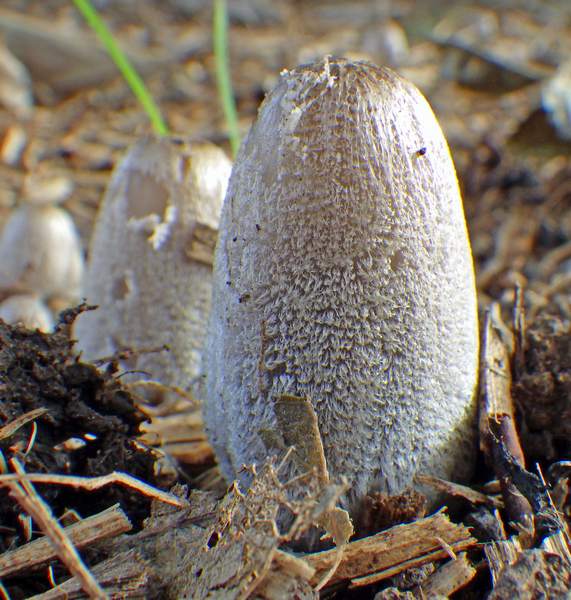
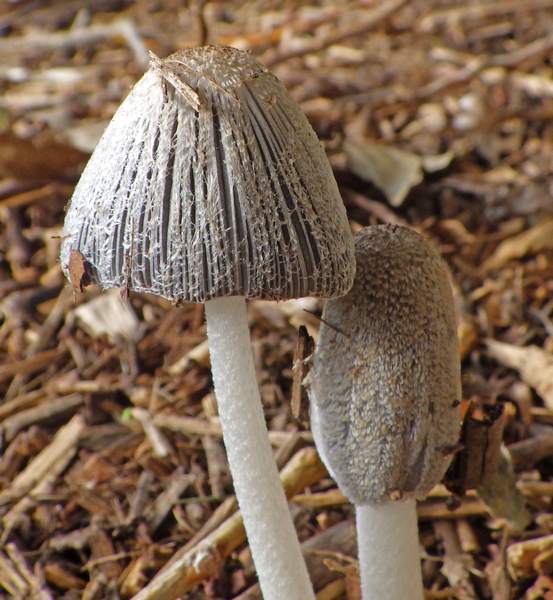
- Cap (Pileus): Initially cylindrical to oval, expanding to bell-shaped or convex, eventually flattening and splitting at the margins. Covered in a dense, woolly or silky layer of silvery-grey hairs (veil remnants) that resemble a hare’s foot. Measures 1–3 cm across.
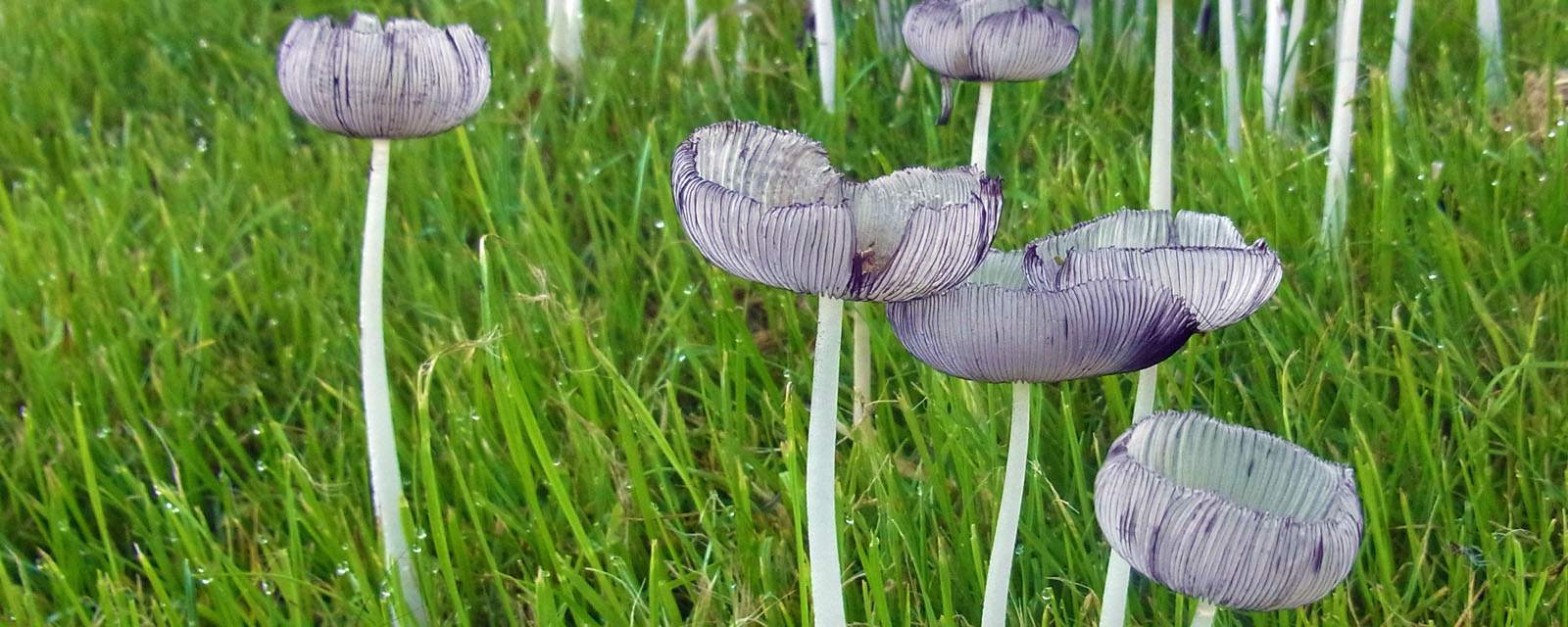
- Gills (Hymenium): Free, crowded, white at first, quickly turning grey and then black as they mature, dissolving into an inky fluid (deliquescence).
- Stem (Stipe): Slender, fragile, hollow, and white, measuring 4–10 cm tall and 2–4 mm wide. The surface is finely hairy or mealy when young.
- Flesh: Extremely thin, fragile, and watery; lacking any distinct taste or smell.
Ecology & Phenology
- Blooming Season: Fruiting bodies appear from July through November, typically peaking in late summer and autumn.
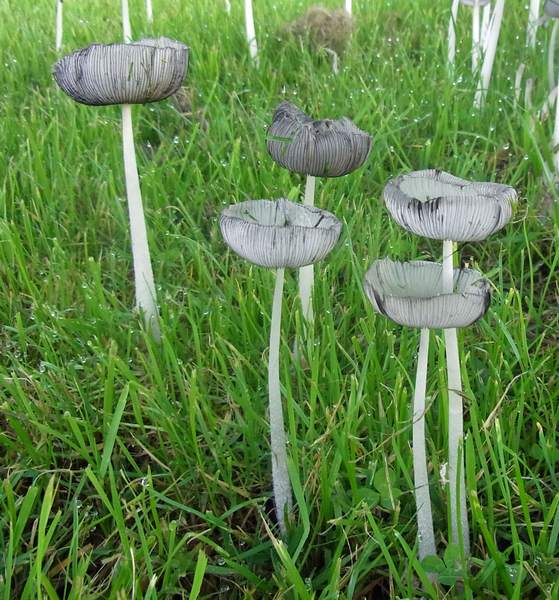
- Habitat & Distribution: Found singly or in small groups on rich organic soils, garden compost, woodchips, or buried wood debris in deciduous woods.
- Ecological Role: Saprotrophic, breaking down organic matter and woody debris. It is notoriously ephemeral—fruiting bodies often emerge overnight and completely deliquesce (dissolve into ink) within a single day.
Safety & Edibility
- Edibility Status: Inedible. Due to its extremely thin flesh, lack of substance, and rapid self-destruction into black liquid, it has no culinary value.
- Toxicity & Poisoning Symptoms: Non-toxic, though some closely related inkcaps contain coprine (which causes adverse reactions with alcohol), Coprinopsis lagopus is generally not considered poisonous—simply worthless for the table.
- Look-Alikes: Can be confused with other small inkcaps (such as the Snowy Inkcap, Coprinopsis nivea), but the distinct silvery-grey, hare-like downy hairs separate C. lagopus.
Hare’s Foot Inkcap: Frequently Asked Questions
What is Hare’s Foot Inkcap?
Hare’s Foot Inkcap (Coprinopsis lagopus) is a delicate, ephemeral woodland mushroom instantly recognized by its dense coating of silvery-grey, hair-like down that resembles a hare’s foot.
Why is it called “Hare’s Foot” Inkcap?
It gets its common name from the distinct layer of soft, woolly, silvery-grey veil remnants covering the young cap, which closely mimics the texture and appearance of a hare’s foot.
Is Hare’s Foot Inkcap edible?
No, it is considered completely inedible and worthless for the table. Its flesh is extremely thin, fragile, and watery, meaning it offers no substance for cooking.
Is Hare’s Foot Inkcap toxic?
Unlike some of its relatives in the inkcap family, it does not contain coprine and is generally considered non-toxic, though it has no culinary value whatsoever.
Why does it dissolve into black ink?
The mushroom undergoes a process called deliquescence. As the spores mature, the gills autodigest—rapidly breaking down into a black, inky fluid to help disperse the spores into the environment.
When and where can you find Hare’s Foot Inkcaps in the UK?
They typically appear from summer through autumn (July to November) across the United Kingdom, often springing up overnight in rich organic soils, garden mulch, woodchips, or decaying wood debris.

This work is licensed under a Creative Commons Attribution 4.0 International License.
You are free to use, share and adapt any of the images on this wildflower gallery page, under the condition we receive a followed backlink to our website https://diversegardens.co.uk as the image source.


