Wild garlic Allium ursinum
Table of Contents
Plant family: Amaryllidaceae
Aliases: Gypsy onion, ramsomes, wild leak, wood garlic
Flowering period: April – June
Flower colour: White
Preferred soil type: Moist, calcareous
Habitat: Woodland, hedgerows, stream sides
Status: Common
General information
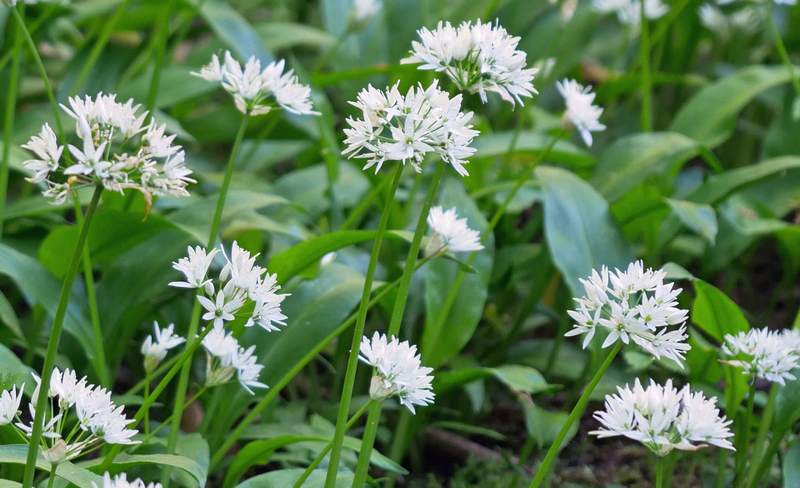
Wild garlic is a bulbous, herbaceous perennial wildflower that omits a pungent garlicky odour giving away the identity of this plant. An early flowering, spring plant, with the first shoots appearing during February and the flowers peaking in April & May as they carpet woodland floors with clusters of tiny, white, star shaped flowers.
It’s happiest growing on moist, chalky soils in hedgerows, stream banks and deciduous woodland. Wild garlic, which is a native, is one of many early flowering spring wildflowers that’s an ancient woodland indicator, others include bluebells, wild primrose and wood anemone.
As its name implies it’s the wild version of traditional garlic used in the kitchen for cooking and has many uses. However, the leaves can be mistaken for lily of the valley and lords and ladies, of which, both are poisonous, so great care must be taken when out foraging.
Identification

Flowers: The flowers are carried in loose, flat topped umbels (30 – 60mm in diameter), each umbel has up to 25 individual, small white flowers (up to 10mm in diameter), borne on short stalks, each having 6 petals.
Leaves: The deep green, basal leaves grow from the bulb and are narrow – spear shaped, with a pointed tips, measuring up to 25cm long. It’s the leaves that produce the distinct garlic odour.
Value for wildlife
Wild garlic provides an early source of nectar for pollinators including bees, butterflies, overflies and beetles. They are attacted to the plant by its pungent onion-chives smell. The bulbs are also a food source of wild pigs.
Uses for wild garlic
As you might have guessed wild garlic is favourite of foragers, with all parts of the plant being edible. The flowers can be used as a garnish and make a great addition to salads.
The leaves can be consumed raw or cooked, they can be added to salads, used to make soup, sauces and pesto to name a few. For a more information on foraging, preparing and cooking wild garlic, you check out this comprehensive guide on the Vegan on Board website
Wild garlic images
Click to enlarge


This work is licensed under a Creative Commons Attribution 4.0 International License.
You are free to use, share and adapt any of the images on this page, under the condition we receive a followed backlink to our website https://diversegardens.co.uk as the image source.