

Common milkwort Polygala vulgaris
Table of Contents
Common Milkwort has a rich folklore with various superstitions, particularly in Europe, where it was once believed to increase the milk yield of new mothers struggling to breastfeed, hence the name “milkwort.”

Plant family: Polygalaceae
Aliases: Field milkwort, snakewort
Flowering period: May – September
Flower colour: Blue, pink or white
Preferred soil type: Light, calcareous, chalky
Habitat: Grassland, sand dunes
Status: Common
General Information
- Common Milkwort, known scientifically as Polygala vulgaris, is a small herbaceous perennial plant that is native to Europe and parts of Asia. It belongs to the Polygalaceae family and is known for its delicate, colourful flowers.
- This plant is frequently found growing in grassy and open habitats, such as meadows, pastures, and heath lands. It prefers free draining, sandy or calcareous soils and is equally happy in both sunny and partially shaded areas. It’s a low growing, trailing plant that can reach up 30 cm in height.
- The plant takes the name “milkwort” from an ancient belief that this wildflower was used as a remedy to increase milk production in nursing mothers. However, there is no data to support this claim.
Identification

- Leaves: Small, smooth-edged, and stalk less. Basal leaves are spatulate with rounded tips, while upper leaves are somewhat narrower and lance-shaped. Crucially, all leaves are arranged alternately along the stem.
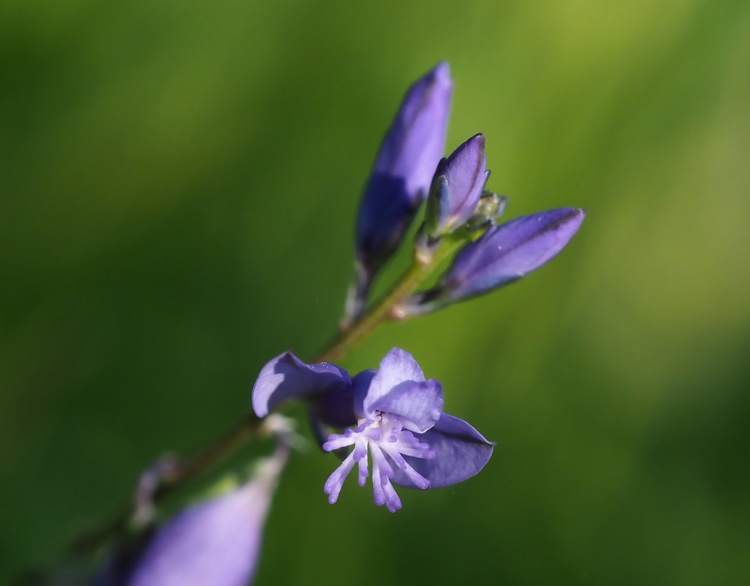
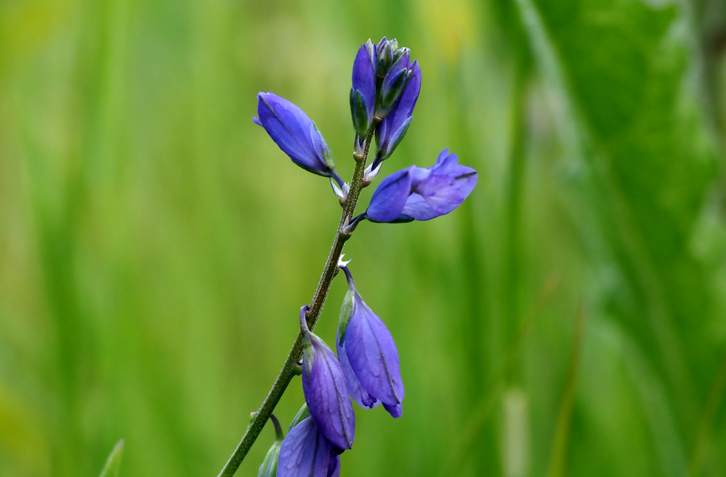
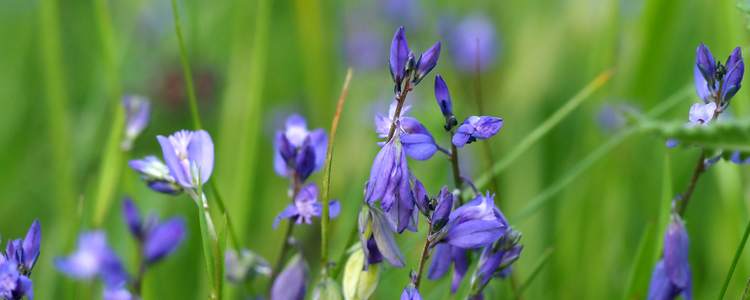
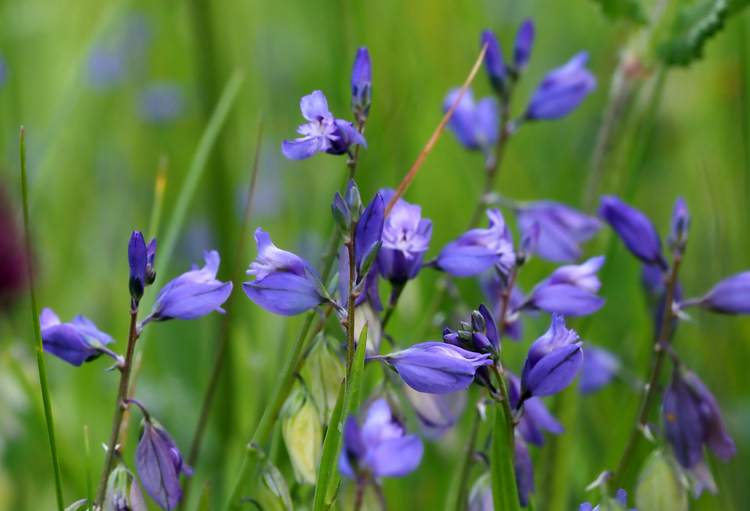
- Flowers: Highly distinctive, pea- or orchid-like flowers gathered in terminal racemes. Flower colors are famously variable—most commonly a vivid sky blue, but frequently found in shades of pink, mauve, purple, or pure white. Each blossom features three small outer green sepals, two large petal-like inner sepals (wings), and three inner petals fused into a tube with a distinctively fringed lower lip.
- Distinctive Features: The complex floral structure and fringed lower lip are primary identifiers. It is easily confused with Heath Milkwort (Polygala serpyllifolia), but Common Milkwort is definitively separated by its entirely alternate lower leaf arrangement.
Value for Wildlife
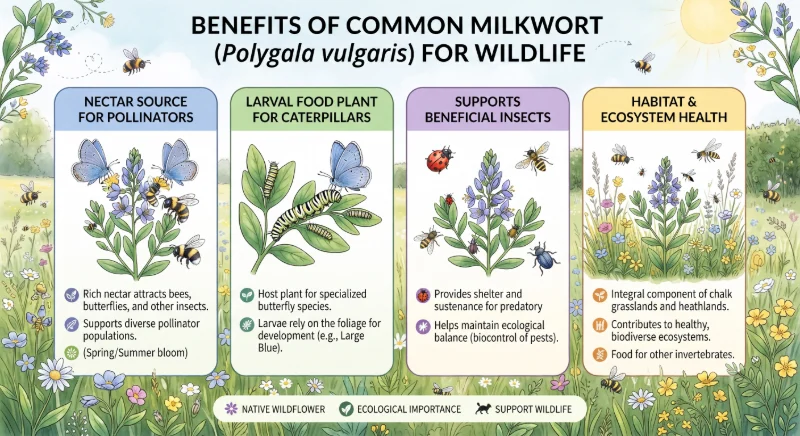
- Pollinators: Frequently visited by short- and long-tongued bees, butterflies, and beneficial hover-flies. These insects are drawn to the plant for its nectar and pollen, which serve as essential sources of food. The plant’s structure allows bees to easily access its nectar, making it a valuable food source during its flowering period.
- Host Plant: Serves occasionally as a specialised larval food plant for local micro-moths.
- Birds & Mammals: The low-growing ground foliage and seed capsules provide some ground cover and support for small grassland herbivores and insects.
Uses
-
Edible Parts & Preparation: Generally not utilized as a food source or culinary vegetable.
-
Medicinal Properties: Historically, the plant earned its genus name Polygala (from Greek words meaning “much milk”) due to traditional beliefs that infusions increased milk production in nursing mothers. Historical herbalists also used related species to treat chest complaints and coughs.
-
Safety & Contraindications: > Foraging & Safety Disclaimer: Polygala vulgaris contains active saponins that can cause gastrointestinal upset if consumed improperly. Because of potential toxicity risks, look-alike hazards, and a lack of modern clinical backing for its historical uses, internal consumption is strongly discouraged. Always consult a certified medical herbalist or healthcare professional before attempting to use wild flora medicinally.
Common Milkwort gallery
Click to enlarge

This work is licensed under a Creative Commons Attribution 4.0 International License.
You are free to use, share and adapt any of the images on this page, under the condition we receive a followed backlink to our website https://diversegardens.co.uk as the image source.


